Choosing the Right Supplement Format: Tablets, Gummies, Capsules, Softgels, Powders, and Liquids
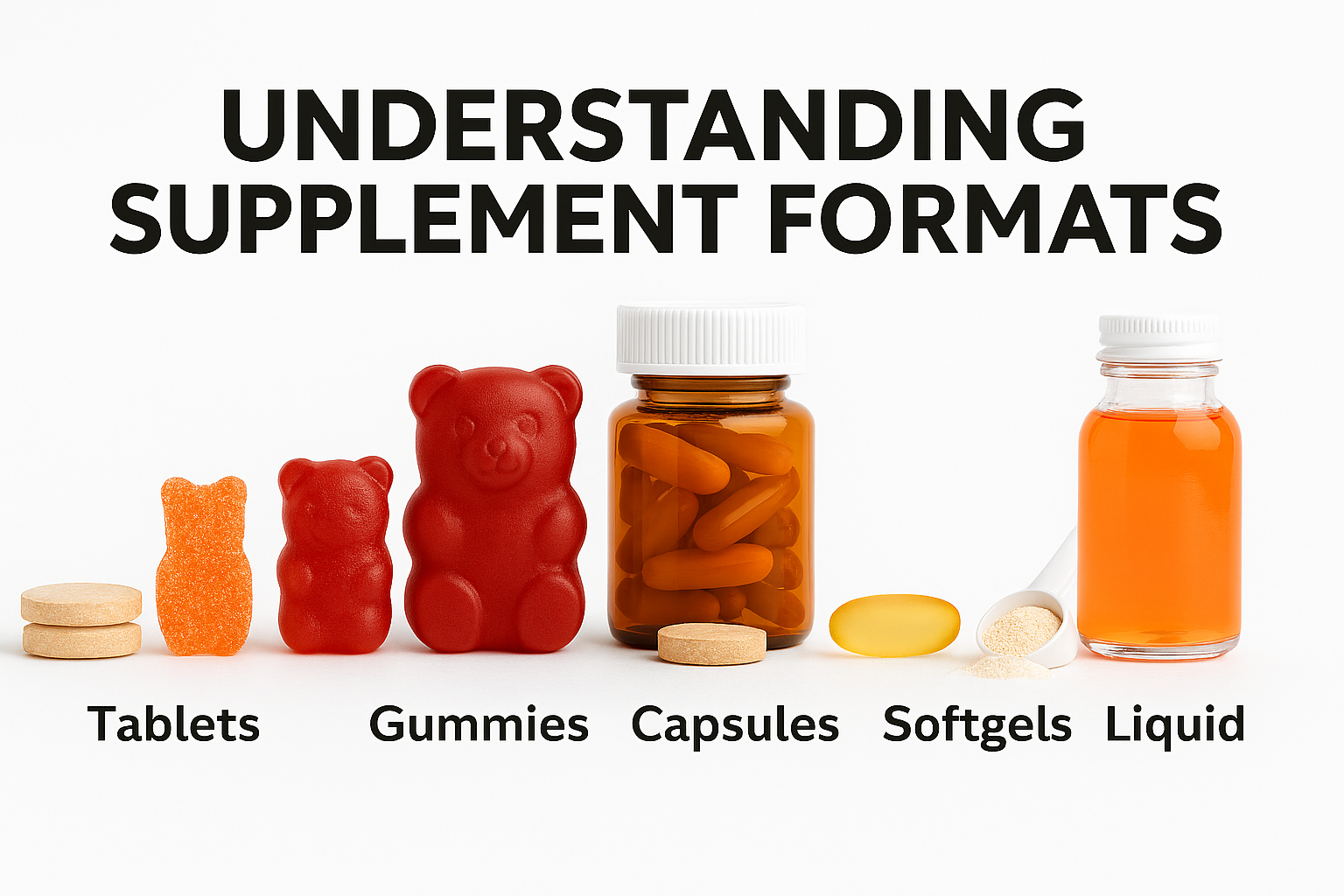
Supplements come in many forms — and each format affects how you absorb nutrients, how easy they are to take, and whether they meet halal standards. For Muslim consumers, format matters not just for convenience but for faith-based compliance.
1. Tablets
Tablets are compressed solids that deliver nutrients in a compact form.
- Pros: Affordable, long shelf life, high dosage capacity
- Cons: Hard to swallow, slower absorption, may contain non-halal coatings
- Halal Notes: Watch for shellac, stearates, or alcohol-based coatings
- Common Uses: Multivitamins, iron, calcium, vitamin C, B-complex
2. Gummies
Gummies are chewable, flavored supplements popular with kids and adults.
- Pros: Easy to take, pleasant taste, encourages consistency
- Cons: Lower nutrient density, added sugars, gelatin concerns
- Halal Notes: Look for fish gelatin, halal bovine gelatin, or pectin; check vitamin D3 and flavoring
- Common Uses: Children’s multivitamins, vitamin D3, omega-3, probiotics, collagen
3. Capsules
Capsules contain powder or pellets inside a shell, often made from gelatin or plant cellulose.
- Pros: Easy to swallow, minimal taste, clean delivery
- Cons: Limited space, may require multiple capsules
- Halal Notes: Avoid non-halal gelatin; look for vegetarian capsules or halal certification
- Common Uses: Probiotics, magnesium, herbal blends, vitamin B12
4. Softgels
Softgels are smooth capsules filled with oils or fat-soluble nutrients.
- Pros: Easy to swallow, protects sensitive ingredients
- Cons: Gelatin-based, less flexible dosing
- Halal Notes: Look for halal-certified bovine or fish gelatin
- Common Uses: Fish oil, vitamin D3, CoQ10, vitamin E
5. Powders
Powders are loose formulations mixed into drinks or food.
- Pros: Fast absorption, customizable dosing, great for large servings
- Cons: Requires mixing, taste and texture issues
- Halal Notes: Generally halal-friendly; check flavoring and emulsifiers
- Common Uses: Vitamin C, greens blends, protein, collagen, magnesium
6. Liquids
Liquid supplements offer fast absorption and flexible dosing.
- Pros: Rapid absorption, easy for kids and seniors, customizable
- Cons: Short shelf life, refrigeration needed, taste varies
- Halal Notes: Check for alcohol-free flavoring and halal-certified vitamin D3
- Common Uses: Multivitamins, iron, vitamin B12, herbal tonics
How Format Affects Halal Status
Format influences not only convenience but also halal compliance. Gelatin, flavoring, coatings, and emulsifiers can vary by format. Muslim consumers should check both active and inactive ingredients, and look for halal certification when possible.
How Compare-Halal.com Helps
- Format filters: Browse by gummies, tablets, capsules, softgels, powders, or liquids
- Halal transparency: See gelatin source, vitamin D3 origin, and alcohol-free flavoring
- Ingredient clarity: Highlights binders, coatings, and emulsifiers
- AI-powered suggestions: Personalized recommendations based on format and halal standards
- Trusted retailer links: Shop confidently with clear product info
Final Thoughts
Each supplement format offers unique benefits — and unique halal challenges. Whether you prefer liquids for fast absorption, gummies for taste, or tablets for value, the key is knowing what to look for. Compare-Halal.com helps you make informed, halal-compliant choices across all formats, so you can support your health and your values with confidence.